 EN
EN


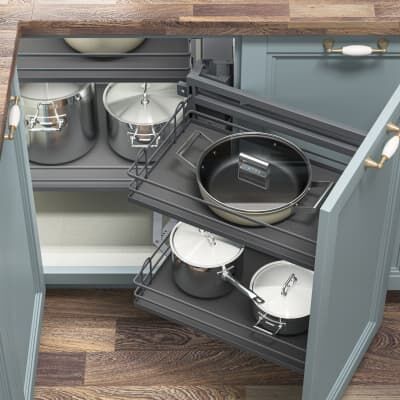
Choosing the right corner cabinet solution can transform how efficiently a kitchen functions. The Magic Corner and the Lazy Susan are the two most commonly considered options, and both approach the same problem — wasted corner space — in very different ways. Understanding how each one works, where each one excels, and where each one falls short is essential before committing to a design that will define your kitchen for years.
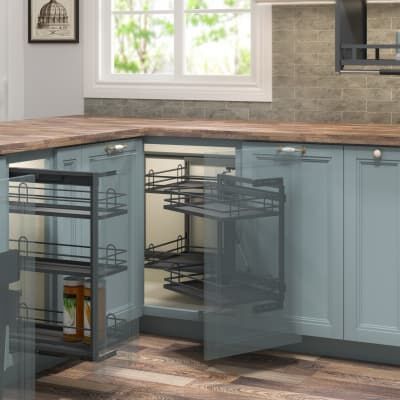
The Magic Corner is a pull-out hardware system that uses linked basket trays to swing out of a corner cabinet opening, bringing stored items directly to the user. The Lazy Susan, by contrast, is a rotating circular shelf platform mounted inside the corner cabinet. Both systems aim to solve corner accessibility, but the Magic Corner consistently delivers a more purposeful, ergonomic, and space-efficient outcome. This article breaks down exactly why, across the dimensions that matter most to homeowners and kitchen designers alike.
How Each System Actually Works
The Mechanism Behind Magic Corner
The Magic Corner operates through a linked-arm swing-out mechanism. When you open the cabinet door, the front basket pulls outward and the rear basket automatically swings into the open doorway, aligning both trays directly in front of you. This means the Magic Corner eliminates the dead zone that standard corner cabinets are notorious for. Every item stored, whether at the front or back, becomes immediately visible and reachable without bending or reaching deep into a dark cavity. The Magic Corner is typically mounted on full-extension slides and hinged connector arms, giving it a smooth and reliable motion cycle after cycle.
How the Lazy Susan Operates
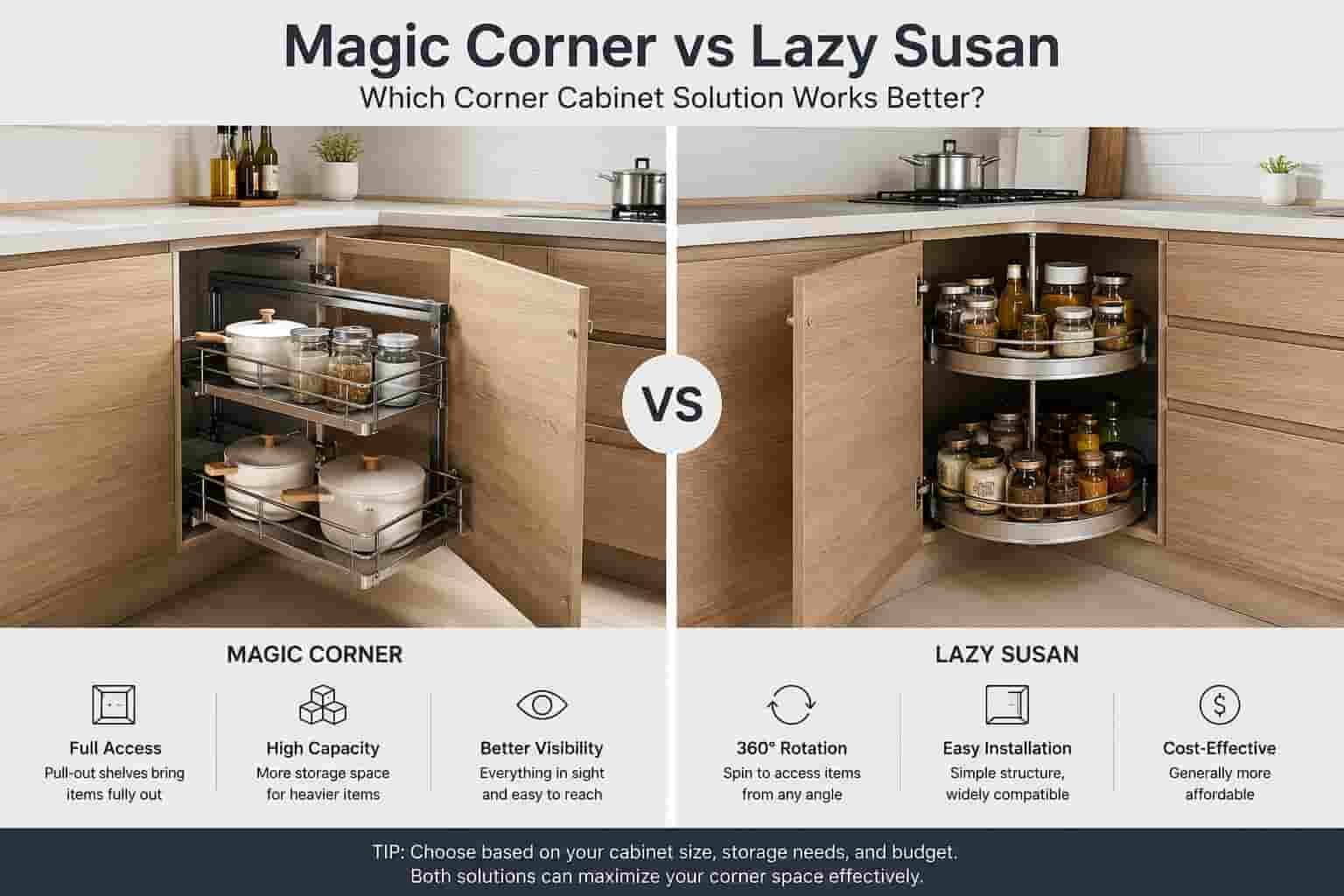
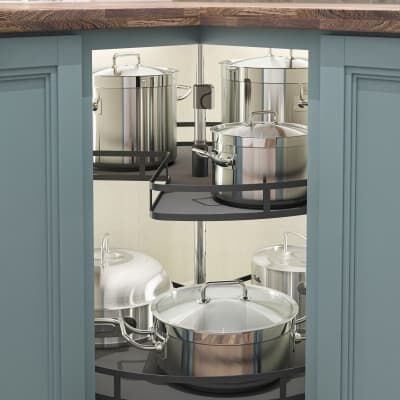
The Lazy Susan uses a vertical pole with two or more circular trays that spin freely around the center axis. To access items, you rotate the tray until the desired object comes to the front of the cabinet opening. While this is a simple and intuitive concept, the Lazy Susan requires the cabinet door to remain open during rotation, and items near the back of the tray are still partially obscured. Compared to the Magic Corner, the Lazy Susan leaves meaningful portions of each shelf underutilized because circular shelves inside a square cabinet produce unavoidable dead corners around the perimeter.
Accessibility, Ergonomics, and Usability in Daily Use
Why Magic Corner Outperforms in Daily Ergonomics
From a daily usability standpoint, the Magic Corner offers a fundamentally superior experience. Because the Magic Corner brings both baskets fully out of the cabinet and into the open kitchen space, the user never needs to crouch, twist, or peer into the cabinet interior. This is especially relevant in lower base cabinets where bending is unavoidable with a Lazy Susan. The Magic Corner also ensures items stay organized in defined zones — heavier cookware on the bottom, lighter pantry items on top — without the risk of items sliding or falling during rotation, which is a persistent issue with Lazy Susan shelves.
Where the Lazy Susan Creates Limitations
The Lazy Susan introduces several practical limitations that compound over time. Taller bottles, heavy pots, or oddly shaped items tend to tip or block rotation on a Lazy Susan. Items stored near the center pole are difficult to grab cleanly, and items stored near the outer edge may slide off the tray during rotation. Unlike the Magic Corner, the Lazy Susan does not bring stored items to you — it simply rotates them into a slightly better position inside the same constrained space. For high-use kitchens, this distinction in daily efficiency becomes significant over time.
Space Efficiency and Installation Suitability
Storage Capacity and Corner Utilization
The Magic Corner makes better use of total available corner volume. Because the linked tray system extends linearly and swings outward, it accesses both the corner depth and the adjacent cabinet section that a Lazy Susan cannot reach. A well-installed Magic Corner can reclaim up to 30 percent more usable storage area compared to a Lazy Susan in the same cabinet footprint. The Magic Corner baskets are also designed with perimeter walls and dividers, keeping items upright and neatly separated, which adds functional density to the available space without adding visual clutter.
Installation Requirements for Magic Corner Units
Installing a Magic Corner requires a standard L-shaped corner base cabinet with a minimum door opening width, typically around 450 to 500 millimeters, to allow the baskets to swing out cleanly. The Magic Corner is not suitable for blind corner cabinets unless a specific blind-corner variant is used. Professional installation is recommended to ensure the hinge arms and slide rails are correctly aligned, as misalignment can cause binding or uneven tray movement. The Lazy Susan, by contrast, is simpler to install but delivers a lesser result. The higher installation effort of the Magic Corner is justified by its significantly better usability and storage performance.
FAQ
Is the Magic Corner suitable for both upper and lower kitchen cabinets?
The Magic Corner is most commonly used in lower base corner cabinets, where depth and accessibility are the greatest challenges. Some variants of the Magic Corner are designed for upper wall cabinets as well, though the swing-out mechanism requires sufficient door clearance and cabinet depth. Always verify the specific model specifications before purchasing a Magic Corner for upper cabinet use.
How durable is the Magic Corner compared to a Lazy Susan over time?
A well-built Magic Corner constructed from heavy-gauge steel with full-extension slides and quality hinge connectors typically offers excellent long-term durability. The linked mechanism in a Magic Corner contains more moving parts than a Lazy Susan, so the quality of materials and installation has a direct impact on lifespan. Lazy Susan units are mechanically simpler, but cheaper variants develop wobble and uneven rotation over time. A quality Magic Corner, properly installed and maintained, will consistently outperform a Lazy Susan in both function and durability over the cabinet's lifetime.
Can the Magic Corner be retrofitted into an existing kitchen?
Yes, retrofitting a Magic Corner into an existing L-shaped corner cabinet is possible in many cases, provided the cabinet interior dimensions and door opening width meet the hardware requirements. A retrofit Magic Corner installation typically involves removing the existing shelf boards and mounting the slide rails and hinge arm assemblies to the cabinet interior walls. Consulting a kitchen hardware specialist before purchasing ensures the chosen Magic Corner model is compatible with your existing cabinet structure and door hinge configuration.