 EN
EN



A lazy susan is one of the most practical solutions ever designed for the kitchen, and it becomes especially valuable when dealing with hard-to-reach corner cabinets. These awkward spaces are notorious for swallowing pots, pans, and pantry items into their depths, making everyday cooking unnecessarily frustrating. By introducing a well-chosen lazy susan into these corners, homeowners can transform dead storage zones into fully functional, easily accessible spaces. The right lazy susan does not just spin — it solves a real organizational problem that plagues kitchens of every size.
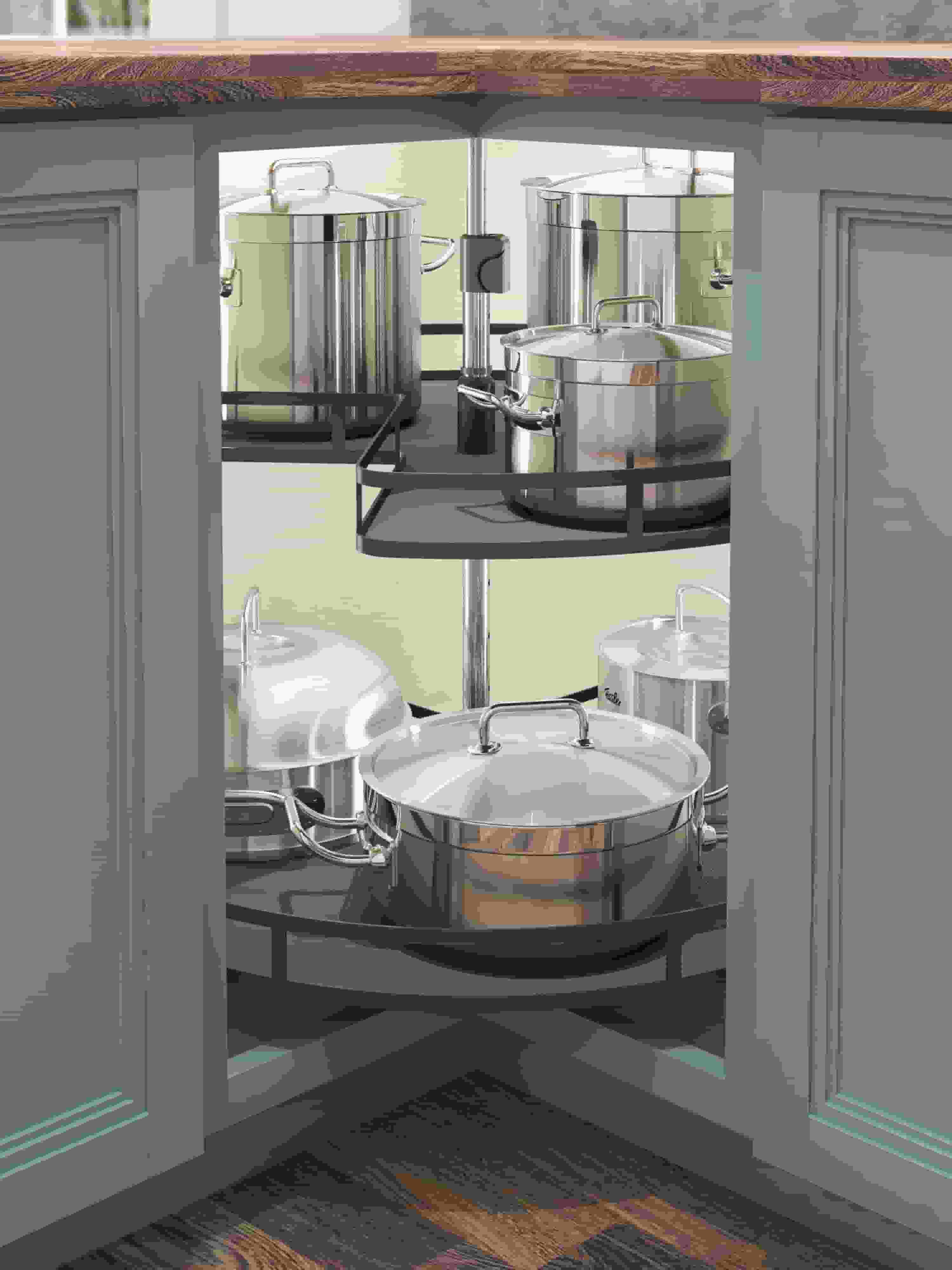
Choosing the best lazy susan for your corner cabinet depends on several factors, including cabinet dimensions, the type of items you store, load requirements, and how the cabinet door opens. Not every lazy susan fits every corner setup, so understanding the different styles and their intended use cases is essential before making a decision. This article walks through the top lazy susan solutions specifically engineered for corner cabinet challenges, helping you make a well-informed choice that delivers lasting results.
Why Corner Cabinets Demand a Specialized Lazy Susan
The Structural Challenge of Corner Storage
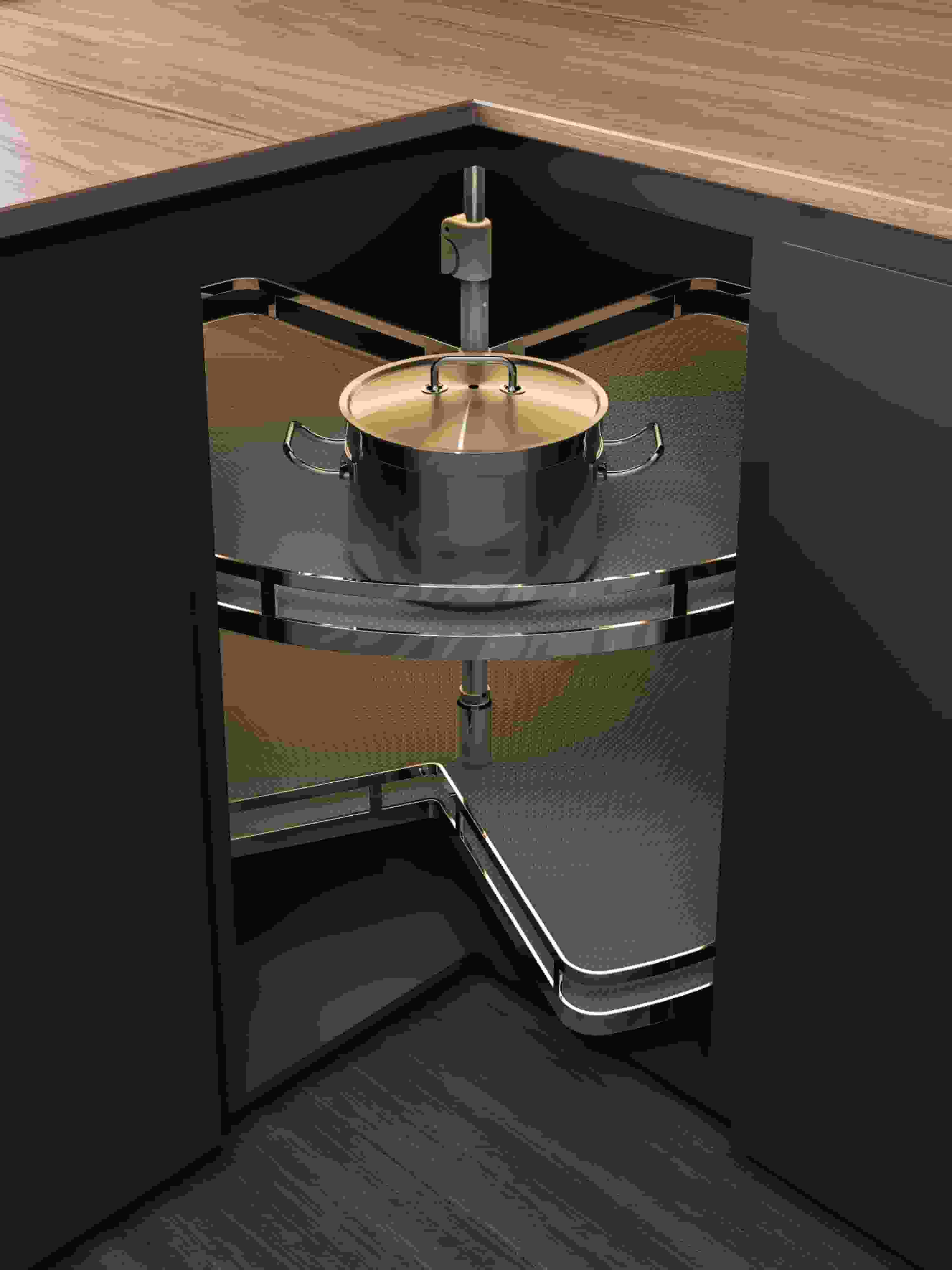
Corner cabinets present a unique structural challenge that standard shelving simply cannot solve. The angular geometry creates deep recesses that are difficult to reach without physically leaning into the cabinet, which is both inconvenient and impractical. A lazy susan is specifically designed to bring the contents of these deep recesses forward through rotation, eliminating the need to dig and search. When you install a lazy susan in a corner cabinet, every item stored on it becomes reachable with a simple spin, no matter how far back it was originally placed.
Blind corner cabinets — those with an obstructed opening — are the most challenging type of corner storage. A lazy susan designed for blind corner use typically features a swing-out mechanism or a shaped tray that pulls outward before rotating, allowing items stored deep inside to slide into view. This engineering detail makes the blind corner lazy susan a particularly effective solution for kitchens where door placement restricts direct access to the full cabinet interior.
Load Capacity and Stability Matter
Not every lazy susan is built to handle heavy kitchen loads. Pots, canned goods, and small appliances can collectively weigh a significant amount, so selecting a lazy susan with an appropriate weight rating is critical. A high-quality lazy susan designed for corner cabinet use should handle at least 25–30 kilograms per tier without wobbling or dragging on the cabinet floor. An anti-slip surface on each tray is equally important, because a lazy susan that allows items to slide during rotation creates mess and potential breakage rather than solving a problem.
Types of Lazy Susan Designs for Corner Cabinets
Full-Circle and D-Shaped Lazy Susan Options
The full-circle lazy susan is the most traditional design and works well in corner cabinets that have a full-width opening. It provides maximum tray surface area and rotates smoothly on a central pole. However, in cabinets with narrower openings, the full-circle lazy susan may catch on the door frame, limiting its rotation arc. For these situations, a D-shaped lazy susan is a much more practical alternative. The flat edge of the D-shape aligns with the cabinet door frame, allowing the tray to swing open along with the door before rotating freely inside the cabinet.
A two-tier lazy susan is another highly effective format for corner cabinets with vertical height to spare. By stacking two rotating trays on a single pole, a two-tier lazy susan doubles the usable storage surface within the same footprint. This format is ideal for kitchens that need to store a high volume of items in a compact space. When the base of a two-tier lazy susan is made from a solid material like wood with anti-slip properties, the entire unit stays stable even when fully loaded.
Pull-Out and Swing-Out Lazy Susan Mechanisms
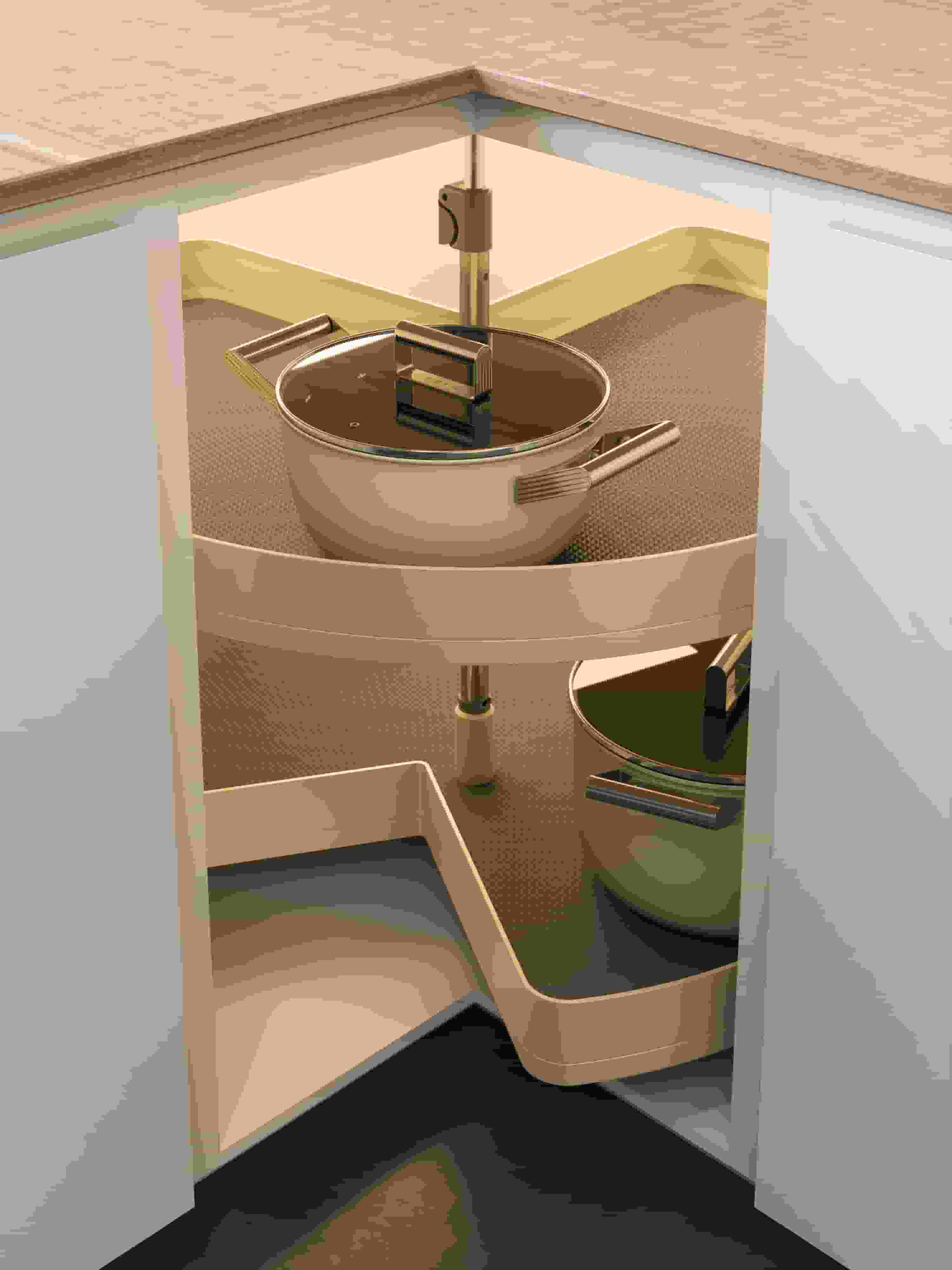
For truly deep blind corner cabinets, a pull-out lazy susan or a kidney-shaped swing-out lazy susan provides the most effective access. The pull-out lazy susan uses a sliding track to bring the trays forward to the cabinet opening before allowing rotation. The kidney-shaped lazy susan, also called a magic corner unit, features trays that hinge outward and swing into accessible position when the door opens. Both formats are engineered to solve the same problem: making every cubic inch of a blind corner cabinet usable without forcing the user to reach blindly into the back.
Key Selection Criteria for the Right Lazy Susan
Measuring Your Cabinet Before Choosing a Lazy Susan
Accurate measurement is the single most important step before purchasing a lazy susan for a corner cabinet. The diameter or width of the lazy susan must fit comfortably within the cabinet without jamming against the interior walls or door frame. For full-circle lazy susan models, measure the shortest interior dimension of the corner cabinet and choose a diameter at least 2–3 centimeters smaller than that measurement. For D-shaped or swing-out lazy susan units, also account for the swing path of the cabinet door to ensure unobstructed movement during daily use.
Height clearance is equally critical, especially for two-tier lazy susan models. Measure from the cabinet floor to the underside of the shelf above, then subtract the height of the lazy susan unit itself plus a small clearance buffer. A lazy susan that is too tall will not fit, and one that is too short may leave wasted vertical space that could have been put to good use. Taking precise measurements before purchase saves time, money, and the frustration of a poor fit.
Material and Surface Considerations
The material of the lazy susan tray affects both durability and function. Wood-base lazy susan models offer a warm, natural aesthetic that complements most kitchen interiors, and when finished with a non-slip coating, they provide excellent grip for heavier items. Plastic lazy susan trays are lightweight and easy to clean but may flex under heavy loads. Wire or metal lazy susan designs allow visibility of stored items but can allow small jars or containers to tip if not designed with proper rim edges. For corner cabinets used for heavy pantry storage, a solid wood-base lazy susan with raised edges and a high load rating is consistently the most reliable choice.
FAQ
What size lazy susan fits most corner cabinets?
Most standard corner cabinets accommodate a lazy susan between 28 and 32 centimeters in diameter. However, the exact fit depends on your specific cabinet dimensions, so always measure the interior width and depth before selecting a lazy susan. Blind corner cabinets may require a D-shaped or swing-out lazy susan rather than a full-circle model to ensure unobstructed door movement.
Can a lazy susan hold heavy pots and pans?
Yes, a high-quality lazy susan designed for corner cabinet use can support substantial weight. Look for a lazy susan rated for at least 25–30 kilograms per tier, with a stable anti-slip base and a reinforced central pole. A two-tier lazy susan with a solid wood base is particularly well-suited for storing heavier kitchen items without wobbling or tipping.
Is a lazy susan easy to install in an existing cabinet?
Most freestanding lazy susan models require no installation at all — you simply place the lazy susan inside the cabinet and begin using it. Pole-mounted two-tier lazy susan units may require a simple tension-fit between the cabinet floor and the shelf above, with no drilling or permanent hardware needed. More complex pull-out or swing-out lazy susan mechanisms may involve some mounting hardware, but most come with clear instructions designed for straightforward DIY installation.