 EN
EN



Radar Sensor vs LiDAR: Which Detection System Wins?
The rapid evolution of autonomous driving, robotics, and industrial automation has ignited a high-stakes debate in the world of spatial perception: Radar vs. LiDAR. As vehicles transition from simple human-operated machines to intelligent, self-aware systems, the "eyes" of these machines must be infallible. While both technologies serve the primary goal of obstacle detection and distance measurement, they rely on fundamentally different physics—radio waves versus light pulses.
To determine which system "wins," one must look beyond simple range figures and examine how these sensors perform under the duress of real-world environmental variables, computational constraints, and manufacturing costs.
1. Understanding the Core Technology: Waves vs. Light
Before comparing their performance, it is essential to understand the mechanical and physical principles that govern each sensor.
Radar (Radio Detection and Ranging)
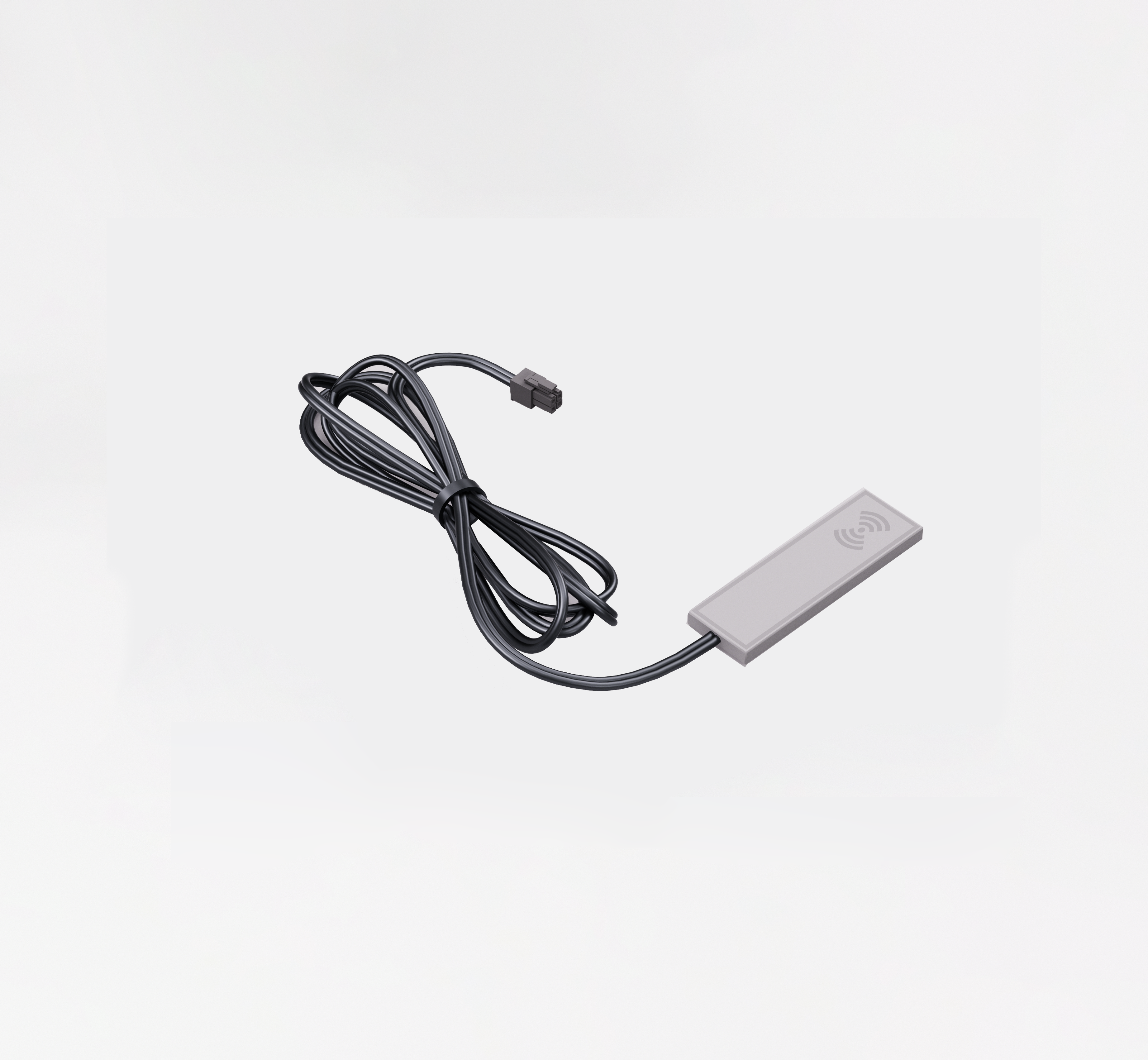
Radar sensors operate by emitting electromagnetic radio waves. When these waves encounter an object, they bounce back to the receiver. By measuring the time-of-flight and the frequency shift (Doppler Effect), Radar can determine an object's distance, angle, and—most importantly—its relative velocity. Modern automotive Radar typically operates in the millimeter-wave (mmWave) band.
LiDAR (Light Detection and Ranging)
LiDAR functions similarly to Radar but utilizes light in the form of pulsed laser beams (typically in the or wavelengths). A LiDAR unit fires millions of laser pulses per second in a or fixed-field pattern. By measuring the return time of each pulse, the system constructs a highly detailed 3D Point Cloud—a digital "twin" of the physical environment with millimeter-level precision.
2. The Battle of Environmental Resilience
In the controlled environment of a laboratory, both sensors perform admirably. However, the real world is messy, filled with fog, torrential rain, and blinding sunlight.
The Radar Advantage: All-Weather Reliability
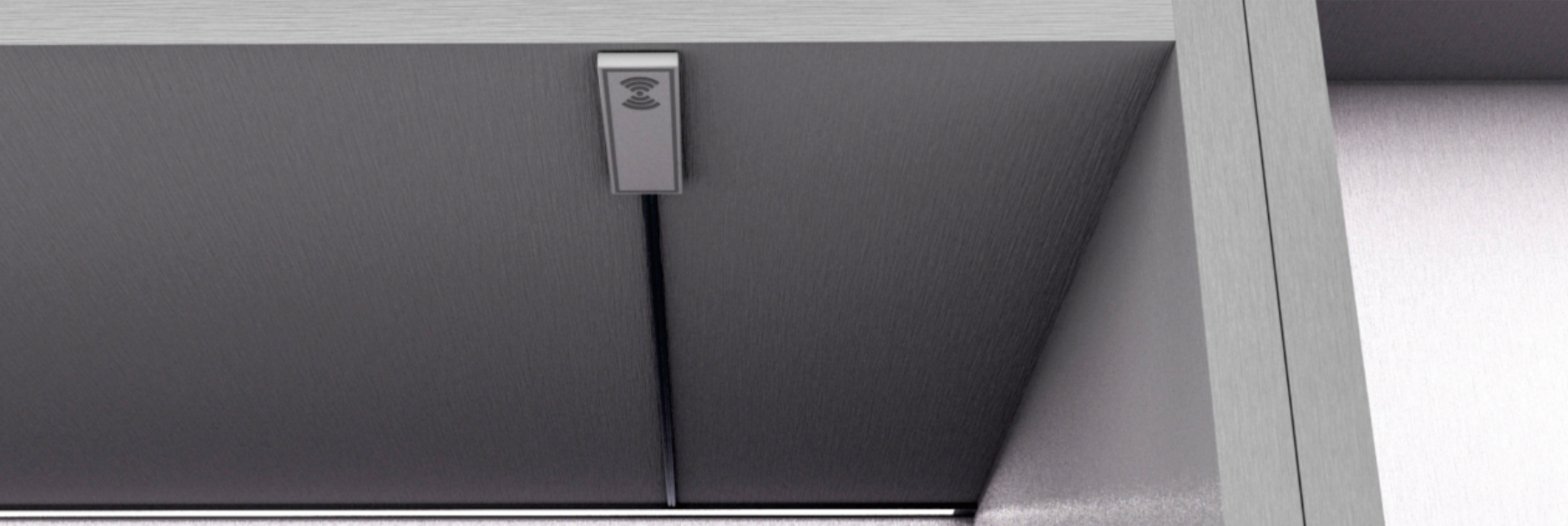
Radar’s greatest strength is its resilience. Because radio waves have much longer wavelengths than light, they can pass through atmospheric obscurants like fog, snow, dust, and heavy rain with minimal attenuation. Furthermore, Radar is an "active" sensor that is unaffected by lighting conditions; it performs identical functions in high-noon glare and pitch-black tunnels.
The LiDAR Weakness: Atmospheric Interference
Because LiDAR relies on light, it suffers from the same limitations as the human eye. Water droplets in fog or heavy rain can scatter laser pulses, leading to "noise" in the point cloud or a significant reduction in detection range. While LiDAR systems offer better performance in these conditions than cheaper versions, Radar remains the undisputed champion of all-weather perception.
3. Precision and Object Recognition: The Power of the Point Cloud
While Radar excels at "seeing" through a storm, it struggles with "understanding" what it sees. This is where LiDAR dominates.
LiDAR’s Precision
LiDAR provides a level of spatial resolution that Radar cannot currently match. A high-resolution LiDAR can distinguish between a child standing on a sidewalk and a fire hydrant right next to them. It can identify the exact shape of a pedestrian, a cyclist, or a road barrier. This high-fidelity mapping allows the vehicle’s "brain" (the AI stack) to make much more nuanced path-planning decisions.
Radar’s "Ghosting" and Resolution Issues
Standard Radar has relatively low spatial resolution. To a Radar sensor, a stalled car under a metallic bridge might look like the bridge itself due to "multipath interference" (radio waves bouncing off multiple metallic surfaces). This has historically led to "false negatives," where autonomous systems struggle to differentiate between a stationary hazard and a harmless overhead structure. While 4D Imaging Radar is bridging this gap by adding vertical resolution, LiDAR is still the gold standard for high-definition 3D mapping.
4. The Velocity Factor: The Doppler Advantage
Speed is a critical variable in collision avoidance. Knowing an object is there is good; knowing exactly how fast it is moving toward you is better.
Radar’s Native Velocity Detection
Radar wins the velocity battle through the Doppler Effect. It can measure the instantaneous radial velocity of an object in a single frame. This allows the system to instantly react to a car ahead slamming on its brakes, often before a camera or LiDAR-based system has processed enough frames to calculate the change in distance over time.
LiDAR’s Sequential Calculation
Traditional ToF (Time-of-Flight) LiDAR must calculate velocity by comparing the change in an object's position across multiple consecutive frames. This introduces a slight latency. However, a new generation of FMCW (Frequency Modulated Continuous Wave) LiDAR is entering the market, which—like Radar—can measure instantaneous velocity, though these units are currently significantly more expensive.
5. Cost, Scalability, and Aesthetics
For a technology to "win" in the mass market, it must be affordable and easy to integrate into consumer products.
Cost: Radar is a mature technology with a highly optimized supply chain. A standard automotive Radar sensor can cost between $50 and $200. In contrast, high-performance LiDAR units, while falling in price, still range from $500 to several thousand dollars.
Form Factor: Radar sensors are small and can be hidden behind plastic bumpers or grilles without losing functionality. LiDAR units (especially mechanical spinning versions) are often bulky and require a "clear view," often leading to the "roof-pod" aesthetic seen on many autonomous test vehicles. Solid-state LiDAR is improving this, but Radar remains easier to hide in a sleek car design.
6. Comparison Table: Radar vs. LiDAR
| Feature | Radar Sensor | LiDAR System | Winner |
|---|---|---|---|
| Object Resolution | Low to Medium | Very High (3D Point Cloud) | LiDAR |
| Weather Resilience | Excellent (Fog/Rain/Snow) | Poor to Fair | Radar |
| Velocity Detection | Instantaneous (Doppler) | Calculated (Latency) | Radar |
| Detection Range | Long () | Medium to Long () | Tie |
| Cost | Low () | High () | Radar |
| Darkness Performance | Excellent | Excellent | Tie |
Technical FAQ: Sensoring the Future
Q: Can a car drive safely with only Radar? A: It is difficult. While some manufacturers have attempted "Vision + Radar" or even "Vision-only" approaches, most experts agree that for Level 3 and Level 4 Autonomous Driving, a redundant sensor suite including both Radar and LiDAR is necessary to handle "edge cases" (unexpected, rare scenarios).
Q: What is 4D Imaging Radar? A: Traditional Radar only sees in 2D (distance and horizontal angle). 4D Radar adds the vertical (elevation) dimension and time (velocity), providing much higher resolution that approaches the quality of early-generation LiDAR.
Q: Does LiDAR interfere with the human eye? A: No. Automotive LiDAR uses Class 1 lasers, which are eye-safe. They operate at power levels and wavelengths that cannot damage the human retina.
Q: Why don't we see LiDAR on all new cars yet? A: Primarily due to cost and computational requirements. Processing a LiDAR point cloud requires significant onboard computing power (GPUs/NPUs), which increases the total vehicle cost.
Conclusion: The "Sensor Fusion" Reality
So, which detection system wins? The answer is: Neither wins alone.
In the current technological landscape, Radar and LiDAR are complementary, not competitive. Radar provides the "safety net" for high-speed tracking and all-weather reliability, while LiDAR provides the "fine-grained detail" required for complex urban navigation.
The industry is moving toward Sensor Fusion, a method where the AI overlaps data from Radar, LiDAR, and Cameras to create a single, unified "truth" about the environment. By combining the resilience of Radar with the precision of LiDAR, we can build machines that are not just as safe as human drivers, but significantly safer. Rather than a winner, we have a partnership that is driving us toward a truly autonomous future.
Table of Contents
- Radar Sensor vs LiDAR: Which Detection System Wins?
- 1. Understanding the Core Technology: Waves vs. Light
- 2. The Battle of Environmental Resilience
- 3. Precision and Object Recognition: The Power of the Point Cloud
- 4. The Velocity Factor: The Doppler Advantage
- 5. Cost, Scalability, and Aesthetics
- 6. Comparison Table: Radar vs. LiDAR
- Technical FAQ: Sensoring the Future
- Conclusion: The "Sensor Fusion" Reality